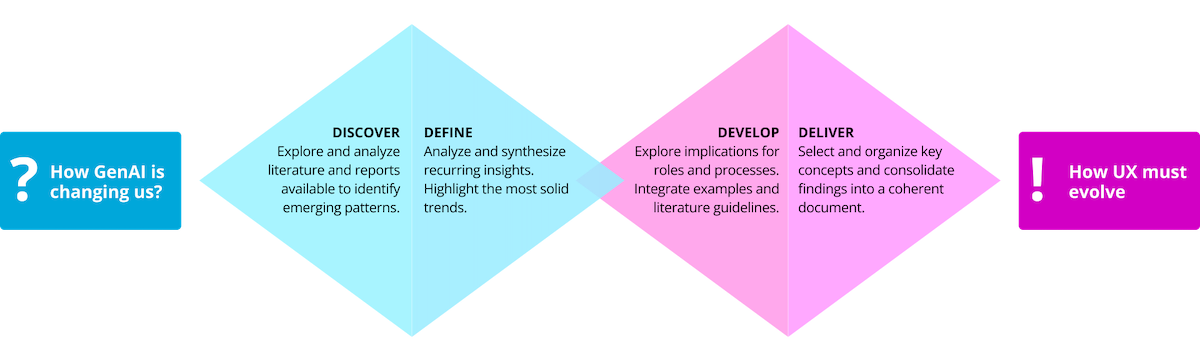
Phase 1: Observing the phenomenon
Goal: Gain a scientifically grounded vision of how GenAI adoption influences people’s behavior, expectations, and needs.
Approach: Hybrid methodology integrating three perspectives:
Psychological-cognitive analysis
Study of evolving user expectations and emerging mental models through scientific literature analysis (neuroscience, cognitive psychology)
UX-driven analysis
Critical deconstruction of cognitive pillars underlying Information Architecture and UX Design heuristics, to verify how GenAI adoption influences their foundations
Integrative qualitative research
Collection of structured anecdotes from expert UX Researchers and analysis of documented case studies to validate theoretical insights with empirical evidence
Method:
- Collaborative collection of bibliographic sources and case studies
- Critical analysis, collaborative discussion, and insight synthesis
Phase 2: Impact on UX Design
Goal: Translate theoretical insights from Phase 1 into practical design guidelines, understanding how User Centered Design assumptions must evolve.
Approach: Multidisciplinary collective discussion of the insights that emerge, combined with contributions gathered through roundtables and collaborative brainstorming.
Project guiding principles
When analyzing and proposing design evolutions, the project commits to keeping central the foundational principles of good design:
- User-centeredness: Do not chase technological trends, but respond to real user needs
- Accessibility: Ensure evolutions don’t exclude user segments
- Inclusivity: Consider generational, cultural, and digital literacy diversity
- Social and environmental responsibility: Evaluate the ethical and environmental implications of new practices