Project Plan
Phase 1: observing the phenomenon. Phase 2: impact on UX design.
Project Plan
This page outlines how we structure the research in two complementary moments: first, we rigorously observe how GenAI adoption is shaping mental models, expectations, and needs; then, we translate those insights into practical guidelines for digital product teams. Below are the goals, approaches, and expected deliverables of each phase.
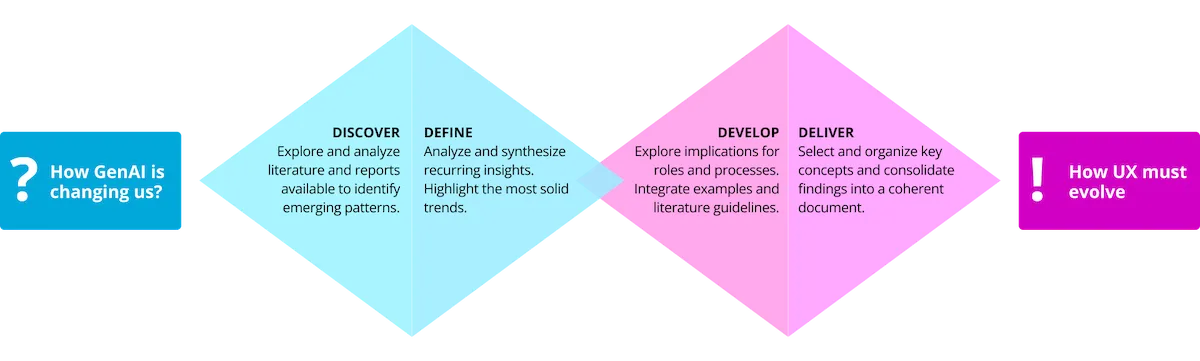
Phase 1: Observing the phenomenon
Goal: Gain a scientifically grounded vision of how GenAI adoption influences people's behavior, expectations, and needs.
Approach: Hybrid methodology integrating three perspectives:
- Psychological-cognitive analysis: Study of evolving user expectations and emerging mental models through scientific literature analysis (neuroscience, cognitive psychology)
- UX-driven analysis: Critical deconstruction of cognitive pillars underlying Information Architecture and UX Design heuristics, to verify how GenAI adoption influences their foundations
- Integrative qualitative research: Collection of structured anecdotes from expert UX Researchers and analysis of documented case studies to validate theoretical insights with empirical evidence
Method:
- Collaborative collection of bibliographic sources and case studies
- Critical analysis, data triangulation, and insight synthesis
Deliverable: Report "New Mental Models" — mapping cognitive shifts, debated UX assumptions, and emerging patterns observed in the field.
Phase 2: Impact on UX Design
Goal: Translate theoretical insights from Phase 1 into practical design guidelines, understanding how User Centered Design assumptions must evolve.
Approach: Multidisciplinary collective discussion of emerged insights and gathering contributions through online roundtables and collaborative brainstorming (synchronous and asynchronous).